When your water heater begins failing, choosing a replacement involves more than comparing equipment prices. If you are researching water heater cost Accord homeowners should consider the system type, fuel source, capacity, installation conditions, and any upgrades required to support the new unit.
Knowing how long a water heater lasts can also help you plan for replacement before a sudden failure leaves your home without hot water. We begin with an on-site assessment to evaluate your current system, household demand, and existing connections. This allows us to recommend an appropriate option and provide an estimate based on the actual scope of the installation.
What Affects Water Heater Cost in Accord?
No single price applies to every water heater replacement. A direct replacement in the same location with compatible connections generally involves less work than converting to another fuel source or installing a different type of system.
The primary factors shaping water heater cost in Accord include:
- The type and efficiency of the new water heater
- Tank capacity or tankless flow rate
- The home’s existing fuel source
- Accessibility of the installation area
- Plumbing, gas, electrical, or venting modifications
- Permit and inspection requirements
- Removal and disposal of the old unit
A standard tank replacement may use many of the existing connections. A conversion to a tankless or heat-pump model could require new utility connections, additional ventilation, drainage, or changes to the installation space.
We evaluate these conditions before presenting an estimate. That way, your quote reflects the equipment, labor, and supporting work your home actually requires.
Water Heater Type and Fuel Source
The water heater and energy source you choose can significantly change the water heater cost Accord homeowners receive. Each option has different equipment, space, utility, and installation requirements.
Storage-tank water heaters keep a supply of heated water ready for use. Replacing an existing tank with a similar model and fuel source may require fewer modifications than changing system types.
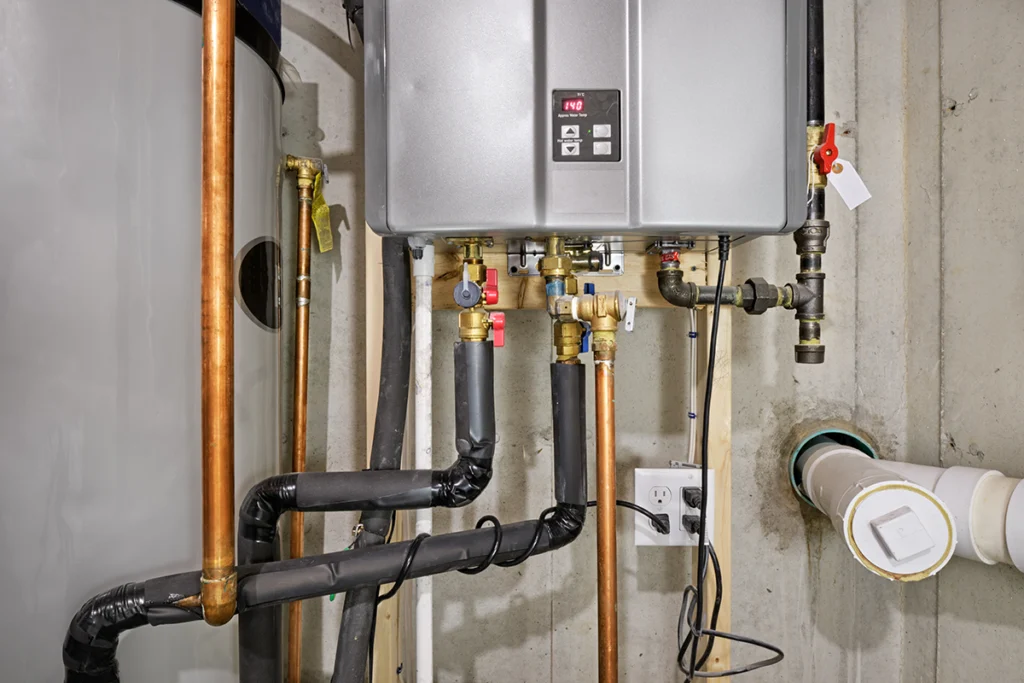
Tankless water heaters heat water as it passes through the unit. Gas models may require adequate gas delivery and specialized venting, while electric models need enough electrical capacity to support their demand. Homeowners should also consider tankless water heater service requirements when comparing long-term ownership needs.
Heat-pump water heaters transfer warmth from the surrounding air into the tank. They need sufficient installation space, airflow, and a way to manage condensate. Comparing a heat pump water heater vs tankless system can help homeowners understand how efficiency, space requirements, hot-water demand, and installation needs differ.
The existing fuel source also affects the project. Switching from electric to gas, gas to electric, or another fuel type may require new utility connections or equipment upgrades. We inspect the current infrastructure before determining whether it can support the system you are considering.
Capacity and Household Hot-Water Demand
The correct capacity depends on how much hot water your household uses and when that demand occurs. We consider the number of residents and bathrooms, along with whether showers, laundry, and dishwashing commonly occur at the same time.
Storage models are evaluated by tank capacity and first-hour rating. ENERGY STAR explains that a storage model’s first-hour rating estimates the maximum amount of hot water it can supply within one hour. This measurement provides more useful information about peak-hour performance than tank capacity alone.
Tankless systems are sized according to flow rate and the temperature increase required to heat the incoming water. A household that frequently operates several fixtures or appliances simultaneously may require a higher-output model.
An undersized water heater may struggle to meet your household’s needs. An unnecessarily large system may raise the initial investment without providing a practical benefit. We calculate your expected demand and recommend a size that balances reliable performance with efficiency.
Installation Complexity and Required Upgrades
Even identical water heaters can produce different installation quotes because every home has different access conditions and utility connections.
Placing a new unit in the same accessible location may be relatively straightforward when the existing plumbing, fuel supply, venting, and electrical connections are compatible. The project becomes more involved when the new system requires:
- A larger gas line
- A dedicated electrical circuit
- An electrical-panel upgrade
- New or modified venting
- Condensate drainage
- Changes to water lines or shutoff valves
- Relocation of the water heater
Accessibility also affects labor. Removing and positioning a water heater in a tight basement corner, crawl space, attic, or crowded utility room can require more time than working in an open mechanical area.
The installation space must also accommodate safe water heater mounting, manufacturer clearances, and access for future maintenance. We inspect these site-specific conditions before explaining how they affect the scope of the project and the final estimate.
Permits, Removal, and Code-Related Costs
The equipment itself is only one part of the total project. Permit fees, inspections, old-unit removal, disposal, and safety upgrades may also contribute to the quote.
Permit requirements and fees can vary by municipality and project type. We determine which approvals apply to the installation and account for them when preparing the estimate.
Removing an existing water heater involves draining the tank, disconnecting the utilities, moving the unit out of the home, and disposing of it properly. Difficult access or an unusually large unit can add labor to this part of the job.
A replacement may also reveal components that no longer meet current installation requirements. Depending on the system, updates could involve venting, shutoff valves, electrical connections, discharge piping, or the water heater pressure relief valve. We identify required upgrades during the assessment rather than leaving them as unexpected additions on installation day.
Getting an Accurate Water Heater Cost Estimate
An accurate estimate begins with an inspection of your existing system and installation area. We document the unit’s age, capacity, fuel source, and condition. We also ask about your household’s hot-water use and any performance problems you have experienced.
Next, we evaluate:
- Available installation space
- Plumbing and drainage connections
- Gas-line capacity
- Electrical capacity
- Venting requirements
- Access for removal and installation
- Potential code-related updates
- Permit and inspection needs
After completing the assessment, we provide an estimate that outlines the recommended equipment, installation labor, necessary modifications, permitting, and removal of the old unit. We also explain the differences between suitable options so you can compare their installation requirements and long-term ownership considerations.
Our licensed team stands behind the installation with a workmanship warranty, and financing options are available for qualifying projects. Contact Efficiency Plumbing for an on-site assessment and a detailed water heater cost Accord estimate based on your home and household needs.
Frequently Asked Questions
What factors have the greatest effect on water heater cost in Accord?
The system type, fuel source, capacity, installation complexity, and necessary utility upgrades are among the main factors. Access conditions, permits, inspections, and removal of the old unit may also affect the estimate.
Does a larger water heater always cost more to install?
A larger or higher-output unit may have a higher equipment cost, but capacity is only one part of the quote. Installation conditions, fuel type, venting, electrical capacity, and required plumbing modifications also influence the total project.
Is a tankless water heater more expensive to install than a tank model?
A tankless installation can involve more supporting work when the home needs a larger gas line, electrical upgrades, or new venting. A direct tank replacement with compatible connections may require fewer modifications. The actual difference depends on the home’s existing infrastructure.
What additional costs can be included in a water heater installation?
Additional costs may include permits, inspections, old-unit removal, disposal, venting modifications, plumbing changes, electrical work, or gas-line upgrades. We inspect the installation area and provide a detailed estimate before the work begins.