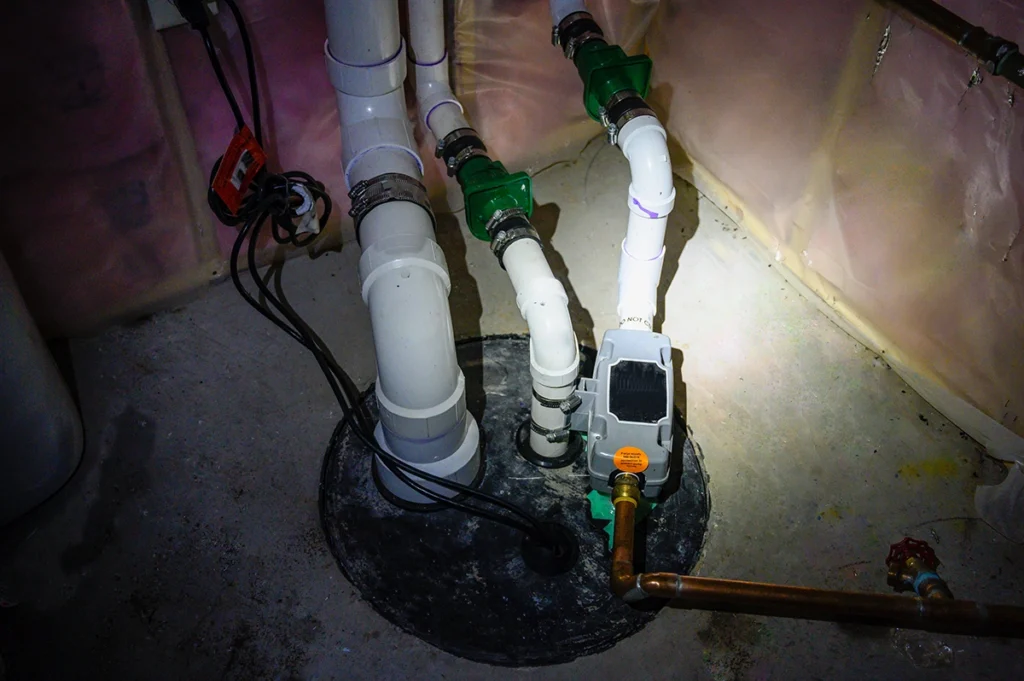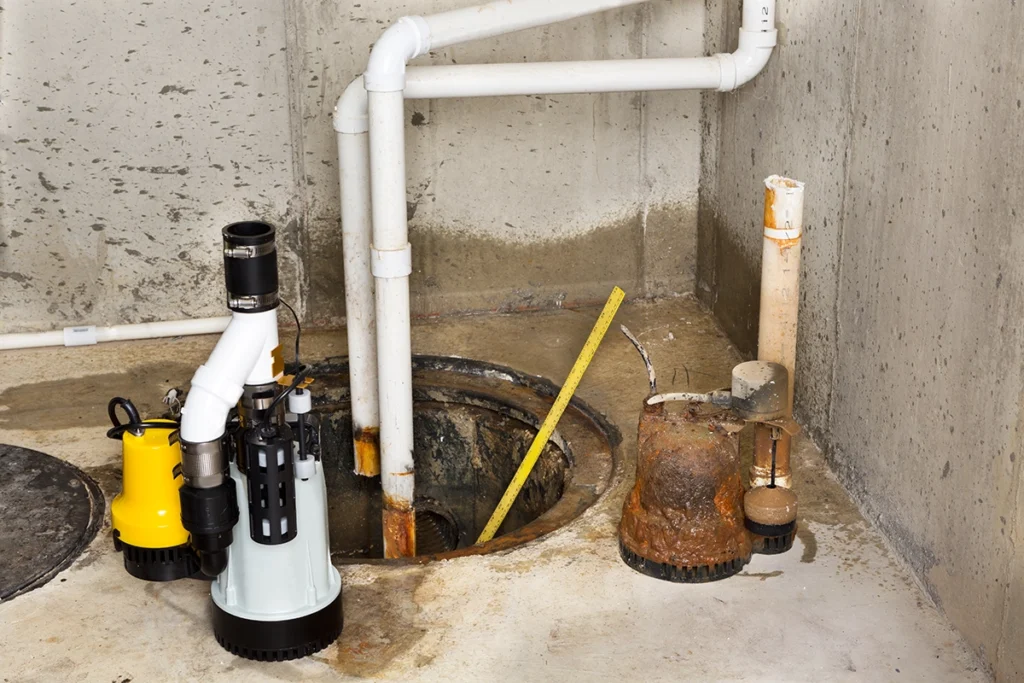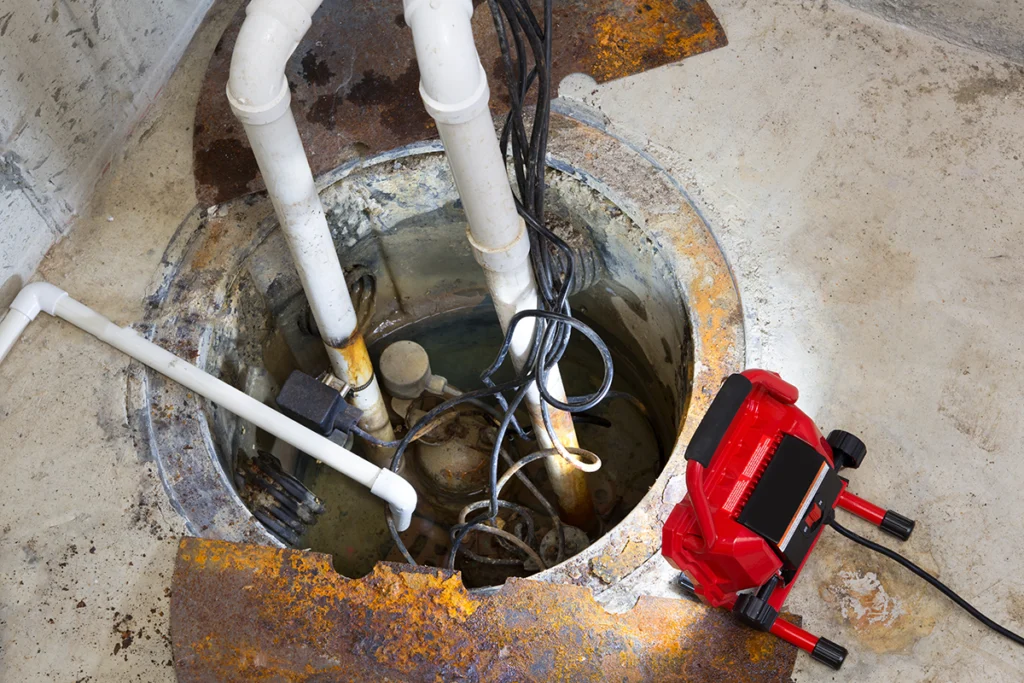

A sump pump check valve keeps water from flowing back down into your sump basin after the pump shuts off. It protects the pump from short-cycling and prevents water from re-entering your basement. When we’re called for sump pump problems, homeowners often suspect the check valve because they hear banging noises or see the pump running constantly. A failed check valve is rarely the whole story. The valve sits in the discharge line and takes a beating from water hammer, debris, and pressure changes. When it breaks, something upstream usually put more stress on it than it was designed to handle. An undersized discharge pipe, incorrect installation angle, or a pump cycling too hard can all overstress the valve.
What Does a Sump Pump Check Valve Do?
A check valve is a small one-way component installed in the sump pump discharge pipe. Its job is to prevent water from flowing backward into your sump pit after the pump shuts off. When your pump runs, it pushes water out through the discharge line and away from your foundation. The moment the pump stops, gravity tries to pull that column of water back down the pipe. Without a check valve, discharged water falls back into the pit causing short cycling and extra motor wear. According to Section P3007 Sumps and Ejectors, building codes require a check valve and full open valve installed on the discharge side between pump and gravity drainage system.
That constant short cycling wears out your pump motor much faster than normal. The pump runs far more often than it should, and the motor overheats from rapid on-off cycles. Mechanical parts inside experience unnecessary stress with every false start. Homeowners who skip or lose a functioning check valve often end up needing a new sump pump years earlier.
When we inspect a sump system after repeated pump failures or oddly frequent cycling, a missing, damaged, or incorrectly installed check valve is one of the first things we look for. If you notice your pump kicking on every few minutes even in dry weather, the check valve may have failed or been left out. You might also hear water rushing back down the discharge line after each cycle. We can confirm whether your system has a working valve and replace it before the next pump motor gives out.
Why Sump Pump Check Valves Fail
A check valve rarely fails on its own. It’s almost always damaged by something happening in the system around it. When we respond to a valve that won’t seal or that’s stuck open, the real problem is usually upstream. Debris in the discharge line, installation mistakes that put stress on the valve, pressure spikes from water hammer, or freeze damage can crack the internal flapper or ball. Replacing the valve without fixing the cause means the new one will fail just as fast.
The most common culprit is debris. Sand, gravel, and sludge pulled up from the pit settle inside the valve body and prevent the flapper from seating. If your pump sits in a pit without a screened inlet or if the basin wasn’t cleaned before installation, every cycle carries solids into the line. Water hammer is the second frequent cause. When the pump shuts off abruptly, the column of water in the vertical discharge pipe slams back down. That sudden pressure spike can crack the valve housing or bend the hinge that holds the flapper.
We also find valves installed backward, with the arrow pointing the wrong direction. Others are installed horizontally when they need to be vertical, or mounted too close to an elbow. All of these mistakes stop the mechanism from opening and closing cleanly. In unheated crawlspaces and rim-joist installations around Hanover, MA, freeze damage is common. Any water trapped in the valve during winter expands as ice and splits the valve from the inside.
When we diagnose a failed check valve, we trace the problem backward. We inspect the pit for sediment and check pump cycling for abrupt shutoff. We measure the installation angle and clearances, looking for signs of impact or freeze cracks. Only after identifying the root cause do we recommend a valve replacement, often paired with corrections to the discharge line, a pump adjustment, or better insulation.
Signs Your Check Valve Isn’t Working
A failing check valve announces itself with distinct symptoms. The most common is a loud banging or thudding noise immediately after your sump pump shuts off. That’s the sound of water slamming back down the discharge pipe and hitting the impeller. If you hear that hammering regularly, the valve has likely stopped holding.
You may also notice the pump cycling far more often than it used to. Sometimes it runs every few minutes even during dry weather. This happens because water drains back into the pit after each cycle, triggering the float switch again and again. That constant short-cycling wears out the pump motor quickly and drives up your electric bill.
Another warning sign is visible water flowing backward through the discharge line when the pump stops. You might also see a pit that refills suspiciously fast between cycles. Some homeowners report a gurgling sound in the pipe as gravity pulls the column of water back down. If you’re seeing or hearing any of these symptoms, the check valve needs professional attention before the extra wear damages your pump. When we respond to these calls in Hanover, MA, we inspect the valve for debris, corrosion, or a stuck flapper. Then we determine whether cleaning or replacement is the right solution.
When to Call a Professional About Your Sump Pump Check Valve
If you hear water draining back into your sump pit after every pump cycle, the check valve is likely failing. The same is true if your sump pump runs constantly without lowering the water level. But replacing the valve alone rarely solves the problem. A licensed plumber needs to trace the cause. A valve that fails prematurely is usually reacting to vibration from a loose discharge pipe, debris entering through an improperly screened line, or water-hammer pressure spikes that crack the flapper. Without addressing the upstream issue, a new valve typically fails within weeks. You’re left with the same flooding risk and a second repair need.
We also recommend a professional inspection if you notice any of the following. Frequent backup into the basement despite a running pump is one red flag. Rattling or banging noises in the discharge line after the pump shuts off are another. Visible cracks and corrosion on the valve body also require attention. We’ll assess the entire discharge assembly and check for installation errors that stress the valve. Then we test system pressure to confirm the valve is correctly matched to your pump’s output. We stand behind our work with a workmanship warranty, and we’re available for emergency service when you need it most.
Even a quick question over the phone helps you avoid a flooded basement. Give us a call at Efficiency Plumbing in Hanover, MA, and we’ll walk you through what to expect. We’ll also schedule an inspection that fits your timeline.
Frequently Asked Questions
How do I know if my sump pump check valve is bad?
You’ll hear a loud banging or thudding noise in the discharge pipe right after your pump shuts off. You might also notice the pump cycling on every few minutes even in dry weather. Water flowing backward into the pit is another clear sign. We often find a stuck flapper or debris blocking the valve from sealing properly.
Can I replace a sump pump check valve myself?
Finding why the valve failed requires a licensed plumber to inspect the entire discharge system. We look for debris, water hammer, incorrect installation angles, or pressure mismatches. Without fixing the upstream cause, a new valve typically fails within weeks, even if the replacement itself seems straightforward.
How often should a sump pump check valve be inspected?
This prevents debris buildup and confirms the flapper or ball still seals completely. During those inspections, we also look for cracks, corrosion, freeze damage, and installation issues that put stress on the valve.
Where is the check valve located on a sump pump?
The check valve is installed in the vertical discharge pipe. It’s usually just above the sump pump outlet and below any horizontal turns or elbows. It has an arrow on the body that must point away from the pump. We often find valves installed backward, horizontally, or too close to fittings. All of these are installation errors that cause premature failure.