If you recently opened your utility statement and thought, “Why is my water bill so high?”, you are not alone. A sudden increase can be frustrating, especially when your daily routine has not changed.
Sometimes, the explanation is simple. You may have used more water than usual during a particular billing period. However, a high water bill can also point to a plumbing problem that is quietly wasting water.
At Efficiency Plumbing, Heating & Air, we help homeowners and businesses in Hanover, MA, and surrounding communities diagnose plumbing issues. If your water use suddenly increases, knowing where to look can help you find the cause sooner.
Here are seven common reasons your bill may be higher than expected.
Why Is My Water Bill So High? Start by Checking for Leaks
Before blaming your utility rate, look for changes in actual water consumption.
Compare your current bill with previous months. Also, check whether the billing period contains more days than usual. Some utilities measure water in gallons, while others use cubic feet.
Then, think about any recent changes around the property. Did you have guests staying over? Have you been watering outside more frequently? Did you recently install a new appliance?
If nothing obvious explains the difference, a leak becomes much more likely.
In fact, the U.S. Environmental Protection Agency reports that the average household can waste about 9,400 gallons of water each year because of leaks. Even relatively small plumbing problems can add up over time.
1. A Running Toilet Can Cause a High Water Bill
A running toilet is one of the first things we recommend checking.
Sometimes, you can clearly hear water running between flushes. However, other toilet leaks are nearly silent.
A worn flapper can allow water to continuously move from the tank into the bowl. Likewise, a faulty fill valve may cause the toilet to refill repeatedly.
Because this water goes directly down the drain, you may never see a puddle.
If you suspect this problem, listen closely after the toilet finishes filling. You can also check for movement inside the bowl when nobody has flushed.
A toilet that continues running should not be ignored. In many cases, a worn flapper, fill valve, or another tank component is responsible. Fixing the faulty part can stop a toilet from running and reduce unnecessary water waste.
However, recurring problems may require professional toilet repair.
2. Dripping Faucets and Showerheads Add Up
One dripping faucet may not seem like a serious problem. Still, those drops continue around the clock.
Worn cartridges, washers, seals, or valve components can cause faucets to drip. Showerheads and tub fixtures may develop similar problems.
Additionally, leaks sometimes worsen gradually. A slow drip today can become a steady stream later.
Check bathrooms, kitchens, utility sinks, and any less frequently used fixtures. Basement sinks and guest bathrooms are particularly easy to overlook.
You should also inspect beneath sinks for moisture. A faucet may leak around its connections instead of dripping from the spout.
Catching these problems early can reduce wasted water and help protect cabinets, flooring, and surrounding materials.
3. An Outdoor Leak May Be Raising Your Water Use
Indoor fixtures are not the only possible source of a high water bill.
During warmer months, outdoor water use may increase significantly. Lawn irrigation, garden hoses, pools, and outdoor faucets can all contribute.
However, a damaged outdoor water line can waste water without attracting much attention.
For example, look for unusually wet areas near outdoor faucets or irrigation lines. Areas of grass that suddenly grow faster may also deserve attention.
Additionally, inspect hose connections and exterior spigots for dripping.
Irrigation systems should be checked carefully because leaks can occur underground. Therefore, water may disappear into the soil before you notice a problem.
Seasonal changes matter too. If you have recently increased lawn or garden watering, compare that change with your billing period.
4. Hidden Pipe Leaks Can Lead to a High Water Bill
Some leaks are easy to spot. Others happen behind walls, beneath floors, or under the foundation.
Watch for warning signs such as:
- Damp or discolored drywall
- Musty odors
- Warped flooring
- Unexpected moisture
- The sound of running water
- Warm areas on the floor
- Reduced water pressure
A hidden plumbing leak may continue for weeks before obvious water damage appears. In some cases, a slab leak can develop beneath the foundation and remain unnoticed until water use rises or other symptoms appear.
Because hidden leaks can damage surrounding materials, early diagnosis is important.
5. Your Water Pressure May Be Too High
Excessive water pressure can affect more than how forcefully water comes from a faucet.
When pressure is too high, more water can flow through fixtures during normal use. Additionally, excessive pressure can put added stress on plumbing connections and appliance supply lines.
Therefore, unusually strong pressure may contribute indirectly to a high water bill.
A pressure-reducing valve, or PRV, helps regulate incoming municipal water pressure. If that valve fails, pressure throughout the property may become too high or inconsistent.
If faucets suddenly seem stronger than before, the pressure should be checked. Excessive pressure can increase water use and place added strain on plumbing fixtures and connections. In some homes, the problem may come from a failing pressure-reducing valve, or PRV, which helps control the pressure entering the plumbing system.
If you have also noticed weak, inconsistent, or unusually strong flow, water pressure that is too high or too low can provide another clue about what is happening.
Proper pressure helps protect pipes, fixtures, and water-using appliances.
6. Your Household May Simply Be Using More Water
Not every increase means something is broken.
Sometimes, water consumption changes without being immediately obvious.
For example, more people may be staying in the home. You might also be washing more laundry or running the dishwasher more frequently.
Additionally, summer activities can increase water use. Filling a pool, watering plants, washing vehicles, and outdoor cleaning all affect consumption.
Small habit changes can make a difference too.
According to Massachusetts water-conservation guidance, about 14% of average household daily water use can be wasted through leaks. The state also recommends checking your water meter when all water-using fixtures are turned off.
Therefore, comparing your current habits with earlier billing periods can help separate normal usage from a plumbing issue.
7. An Appliance or Water-Using Fixture May Be Leaking
Many appliances depend on plumbing connections that homeowners rarely inspect.
Washing machines, dishwashers, refrigerators, water heaters, and water filtration equipment can all develop leaks.
Some leaks create obvious puddles. However, others remain hidden behind the appliance or travel directly into a drain.
Check supply hoses and nearby flooring whenever possible. Additionally, look around your water heater for signs of dripping or moisture.
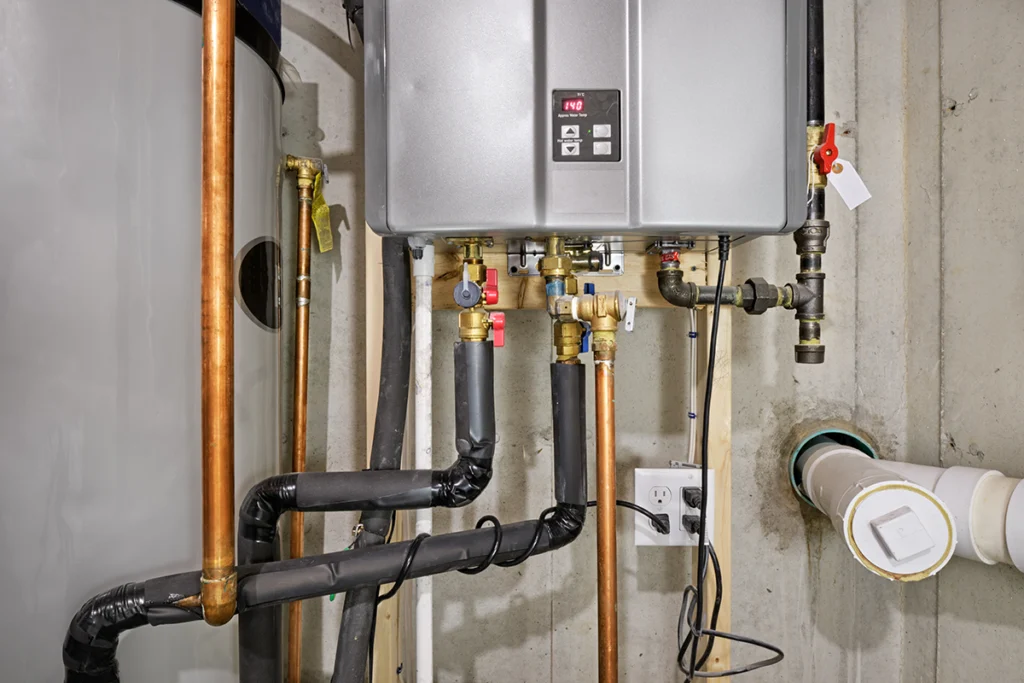
Water heaters deserve particular attention because leaks can develop around supply connections, valves, or the tank itself. Even a slow water heater leak can waste water before it becomes obvious enough to create a puddle.
How to Check Whether a High Water Bill Is Caused by a Leak
Your water meter can provide a useful clue.
First, turn off faucets and water-using appliances throughout the property. Make sure nobody flushes a toilet or uses water during the test.
Then, check the water meter.
Wait for a period without using any water and check it again. If the reading changes, water may be flowing somewhere in the plumbing system.
However, finding the exact location can be more complicated.
A plumber can inspect fixtures, valves, water pressure, exposed piping, and other likely problem areas. When necessary, professional leak-detection methods can help locate concealed problems.
When Should You Call a Plumber About a High Water Bill?
One unusually high bill does not always mean you have a major leak. Still, a large or unexplained increase deserves investigation.
Call a plumber when you notice continuing meter movement with everything turned off. You should also get help if you find damp areas, running toilets, or unexplained plumbing noises.
Likewise, water pressure changes can signal a larger issue.
At Efficiency Plumbing, Heating & Air, we can inspect plumbing systems in Hanover, MA, and surrounding South Shore communities. We can identify likely sources of water loss and recommend the appropriate repair.
Finding the problem early can also reduce the risk of water damage.
If you are still wondering why is my water bill so high, do not assume the increase will correct itself. Contact us today to schedule plumbing service and get to the source of the problem.
Frequently Asked Questions
Why is my water bill so high all of a sudden?
A sudden increase may come from a running toilet, hidden pipe leak, dripping fixture, outdoor water use, or appliance leak. Compare your recent usage and check your water meter for unexplained flow.
Can a running toilet cause a high water bill?
Yes. A toilet can continuously waste water when the flapper, fill valve, or another tank component fails. Some toilet leaks are quiet, so you may not immediately notice them.
How can I tell if I have a hidden water leak?
Turn off all water-using fixtures and appliances, then check your water meter. Continued meter movement may indicate a leak. Other signs include damp areas, musty odors, or running-water sounds.
Should I call a plumber if my water bill suddenly increases?
Consider calling a plumber when you cannot explain the increase through normal water use. Professional inspection can identify running fixtures, pressure problems, appliance leaks, and concealed pipe leaks.